Ever watch your team get run into the ground because someone in leadership picked the wrong fight?
I have. And it taught me a skill I wish I had learned earlier: knowing which hills are worth dying on.
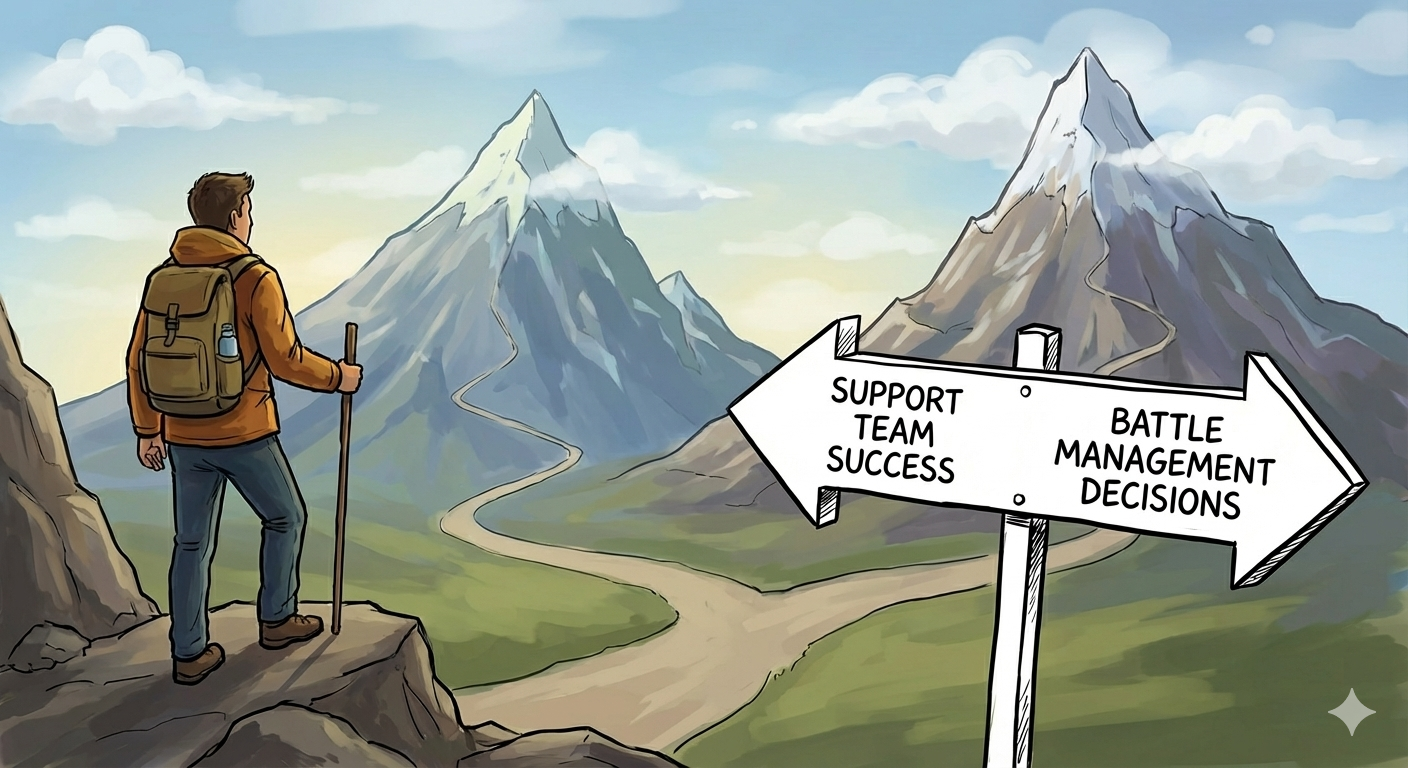
Picking the right path becomes so critical for your work performance and relationships.
As Part Of An Organization: Is Everyone Along For The Ride?
A previous company was chasing an acquisition. Leadership was laser-focused on top line growth, which meant taking on projects that looked good on paper but bled the team dry.
Then came our biggest contract ever. More work. Tighter timelines.
Our team pushed back. We raised exhaustion. We raised concerns.
Leadership didn't just say no. They shut us down with expletives and derogatory statements. That was the moment I knew we had a problem. Not a strategy problem. A leadership problem.
So what happened? The team stalled. Work slowed. Deadlines slipped. When you push people past their limit and refuse to listen, momentum doesn't slow. It stops.
Before you're prepared to die on a hill, make sure you have a team willing to climb it with you.
As a Line Manager: Diagnose Before You Prescribe
I hired someone talented who couldn't find their footing. Getting beat up in meetings. Missing deliverables. Struggling with a new business domain.
Leadership was on me. "Was this the right hire?" The pressure was building to cut my losses.
My instinct was to push harder. More feedback. More accountability. Make it a performance issue and document my way out.
Instead, I paused. Was this the hill?
I pulled back and had a real conversation. Turns out there was a disorder they were managing that I knew nothing about. Once I understood that, everything changed. I researched strategies, found tools, shared some of my own experiences, and we built a path forward together.
They started excelling. If I had died on that performance hill, I would have lost someone worth keeping.
Not every struggle is a performance issue. Before you pick a hill, make sure you understand what you're actually looking at.
As a Colleague: Are Your Teammates Working Up Or Out
When someone is dragging the team down, you face a decision: do we work this person up, or work them out?
Before you die on that hill, ask yourself: did they get what they needed to succeed? Training? Clear expectations? Support? If not, the failure isn't theirs. It's the system's.
Today, AI gives you more ways to work someone up before you decide to work them out. Use them.
But if they've had every opportunity and they're still blocking progress, you've earned the right to have the harder conversation.
Not every underperformer is a lost cause. But not every investment pays off either. Know which hill you're on before you commit.
We all want to use AI to accelerate our colleagues. But when do we make the call that we need to replace their skills or replace them.
The Takeaway
Being on paternity leave last year gave me time to reflect on this. At home with my wife and our one year old, I ask myself the same question I ask at work: is this worth the fight?
Most hills aren't worth dying on. The skill is knowing which ones are.

The next time someone asks you to die on a hill, ask them one question: are you climbing it with me?
Thank you for reading. If you like the newsletter feel free to forward along and help drive new eyes to Syllabi!